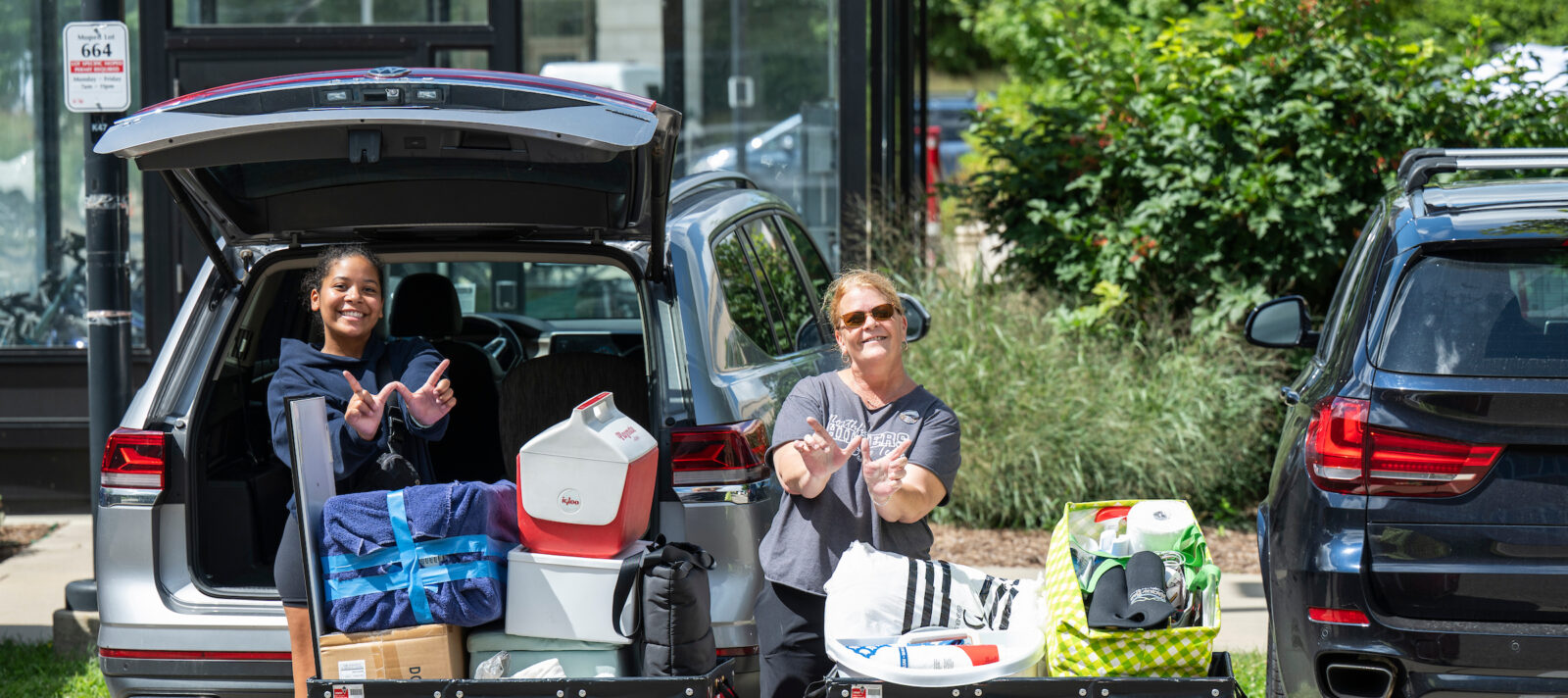
The First-Year Experience
A Guide for Badger Families
The transition from high school to college is a significant milestone in a student’s life. While every student is different, feelings of nervousness, excitement, pressure, and success are common. The following timeline is designed to provide you with information about transitions that students may experience during their first year of college.
On this Page
UW–Madison Student Timeline
Late Summer: Preparing for transition 🌞
As the start of classes approaches, it’s normal for students—and families—to feel a mix of excitement and uncertainty. Your student may be wondering:
- Will I like it at UW–Madison?
- Will I get along with my roommate?
- Will I make friends?
- Can I handle college classes?
- What will happen to my relationships back home?
These questions are part of the transition to college life. It’s a time of big changes, and it’s okay to feel unsure.
Tips for Parents and Families 💡
- Expect mixed emotions for both you and your student. Discomfort is part of growth.
- Discuss academics and encourage your student to utilize campus resources, such as advising and tutoring.
- Create a financial plan together and discuss your expectations regarding spending and payments.
- Set communication expectations about how often you’ll check in and what works best for both of you.
- Discuss personal choices, including alcohol use and decision-making, in a supportive and open way.
Conversation Starters 🗨️
- What are you most looking forward to about attending UW–Madison?
- What are you most nervous about?
What is a House Fellow?
House fellows are student staff members who live in the residence halls and work with residents to build a strong community. They help students address problems and get connected on campus. Students should be encouraged to get to know their house fellow.
September: Settling In 🍂
As students arrive on campus and begin classes, they start making their own choices and experiencing new freedoms. It’s an exciting time—but also one that can bring feelings of homesickness and a desire for frequent contact with family. These emotions are normal and often fade as students adjust.
Students are meeting roommates, making new friends, and learning their way around campus. This is also when many students spend money on textbooks, supplies, and dorm essentials.
Transfer students can connect through the Transfer Transition Program (TTP) and the Transfer Engagement Center (TEC), which offer events and support to help them feel at home.
Tips for Parents and Families💡
- Listen with an open mind, as your student may be navigating a lot of change.
- Ask about classes and encourage the use of academic resources.
- Support social connections by encouraging attendance at Wisconsin Welcome events.
- Discuss communication and check in to see if your communication expectations are being met.
- Review spending habits together to ensure you’re on the same page.
Conversation Starters 🗨️
- What is your roommate like?
- Which classes seem most interesting to you?
- Have you found a good place to study?
- What Wisconsin Welcome events have you attended?
- Is the amount of money we agreed on working out?
- How are your classes going? Are any harder than you expected?
October—November: Building Academic Momentum 🍁
By mid-semester, students are receiving feedback on their academic progress. Some may feel overwhelmed by the workload or disappointed by early grades. Time management challenges and roommate tensions may surface as the initial excitement of the semester fades.
This is also a time for planning ahead. Students begin registering for spring classes with their academic advisors and may start discussing housing options for the following year. Many are also thinking about upcoming breaks and staying connected with family life at home.
Tips for Parents and Families 💡
- Express confidence in your student’s ability to succeed, even if they’re facing academic or personal challenges.
- Keep communication open and two-way. Share updates from home and avoid making major changes (such as moving or redecorating their room) without discussing them first.
- Discuss study habits and time management, and encourage your student to utilize campus resources, such as tutoring and office hours.
- Support academic planning by reminding your student to meet with their advisor and prepare for spring course enrollment.
- Plan upcoming breaks, such as Thanksgiving, and consider how they may impact your home routines.
- Encourage campus involvement by asking about clubs, organizations, or events that interest them.
- Review financial responsibilities, including FAFSA deadlines, scholarship applications, and budgeting.
- Help with housing decisions by discussing on-campus vs. off-campus options for the following year. Ask your student what kind of living environment will best support their academic success. Refer them to Off-Campus Housing Services for resources and rental listings.
Conversation Starters 🗨️
- How are you managing the workload? What is your study schedule?
- What courses are you thinking of taking next semester?
- Are you thinking about joining any groups, clubs, or activities? Which ones? Why?
- Have you met with any of your professors, teaching assistants, or your advisor?
- What is working well? How have your exams and papers been? Will you do anything differently next time?
Roommate Conflict
It’s normal for conflicts to arise between roommates, especially if this is the first time your student is sharing a space, possibly with someone very different from themselves. Most issues can be resolved when roommates talk openly, listen to each other, and stay flexible.
Be supportive, but avoid getting directly involved. Instead, encourage your student to use University Housing resources. If they can’t resolve the issue on their own, suggest they reach out to their house fellow.
House fellows are trained in conflict resolution and can meet privately with your student or facilitate a conversation between roommates. They often use a Roommate Agreement to guide discussions. If the situation doesn’t improve, the house fellow will connect with University Housing staff to explore further solutions.
Winter Break: Coming Home 🎇
After final exams, many students return home for winter break. This time can bring joy and challenges as everyone adjusts to new routines. Students often use the break to rest, reconnect with friends, and reflect on their first semester. They’ll also receive grades, which may bring pride, relief, or disappointment.
Tips for Parents and Families 💡
- Set expectations early by discussing schedules, responsibilities, and household rules with your student before they come home.
- Be ready for mixed emotions; your student may want independence while still relying on family support.
- Celebrate achievements and discuss challenges, help them reflect on what went well and what they might do differently next semester.
Conversation Starters 🗨️
- Let’s talk about how things will work at home now that you’re a college student.
- What was the best part of your first semester? What would you change?
- What classes are you taking next semester?
January-February: A Fresh Start ❄️
After winter break, students return ready to start a new semester. This is a common time for them to reassess study habits, improve time management, and explore majors or career options. Many will also begin planning for spring break, whether that means travel, work, or catching up on coursework.
Tips for Parents and Families 💡
- Review budgets based on last semester’s experience and adjust if needed.
- Ask what changes might help support your student’s well-being this term.
- Discuss spring break safety and plans early.
Conversation Starters 🗨️
- What do you like about your new classes?
- Are you doing anything differently with your studying this semester?
- Have you decided what you’re doing for spring break?
- Tell me about people you’ve met and activities you’re enjoying on campus.
March—May: Wrapping up the Year 🌸
Spring recess passes quickly, and students juggle midterms while planning for their summer break. Many feel more confident managing their workload and stress. During this time, students will register for fall classes, consider summer courses, and make plans for work or internships. Some may feel excited—or conflicted—about leaving Madison. In contrast, others choose to stay for classes or to pursue job opportunities. By the end of the semester, you’ll likely be amazed at how much your student has grown.
Tips for Parents and Families 💡
- Reflect on the year together and discuss what worked well and what could be improved to support learning and well-being.
- Discuss your student’s summer plans, such as work, internships, or taking a course to stay on track for graduation.
- Plan for transitions at home. If your student returns, set expectations for rules, responsibilities, and earning money.
- Celebrate accomplishments and acknowledge how much your student has learned and grown.
Conversation Starters 🗨️
- What value could taking a summer course provide? Have you talked with your advisor?
- What classes are you planning for next year? Are you narrowing in on a major?
- What are you looking forward to about next year’s living arrangements?
- What do you wish you had done differently this year?
- I’m so proud of how you’ve grown this year!
Finding a Supportive Community
UW–Madison offers many ways for students to find community and feel a sense of belonging, but making friends takes time. Your relationship with your student is unique, so approach these conversations with honesty, empathy, and patience.

What to Keep in Mind ✅
- It’s normal to feel lonely at first. Remind your student that adjusting takes time and effort.
- Listen with care. Show empathy and encourage resilience. Use what you learned at SOAR and through the Parent and Family Program to guide your student toward campus resources.
- Friendships develop differently. Some students prefer one-on-one connections, while others thrive in group settings. If the first attempt doesn’t click, encourage them to keep trying.
Ways to Get Involved 🤝
- Student organizations: UW–Madison has over 1,000 student organizations, ranging from academic clubs to cultural groups.
- Events and activities: Encourage your student to attend campus events, volunteer, or get a part-time job to meet new people.
- Residence hall support: House fellows are trained to help students who feel homesick and can connect them to additional resources.
Mental Health Support 🧠
- University Health Services (UHS) offers free, confidential counseling.
- First-time appointments: Call 608-265-5600 (option 2) or schedule through MyUHS.
- 24/7 crisis support: Call 608-265-5600 (option 9) to speak with a counselor.
Summary of Advice for Families
Change is exciting, but it can also be stressful. Expect mixed emotions for both you and your student. Discomfort is normal during this transition.
Support Your Student’s Independence 🤝
- Express confidence in their ability to succeed.
- Be a coach, not a problem-solver, to help them learn to navigate challenges on their own.
Talk About Academics and Goals 🎓
- Discuss expectations for classes, majors, and careers.
- Encourage your student to set personal and academic goals.
- Remember: college is different from high school—grades may not look the same at first.
Plan Financially 💰
- Create a budget together and discuss spending and employment options.
Discuss Personal Choices 🗣️
- Have open conversations about alcohol and other decisions your student will face.
- Encourage responsibility and good judgment.
Encourage New Experiences 🌍
- College is a time to try new things and meet different people.
- Support involvement in activities that promote growth and well-being.
Stay Connected 🏠
- Share major changes at home (moving, remodeling, etc.).
- Acknowledge that your student may miss family events and find creative ways to keep them involved.
- Send care packages with notes, practical items, or treats, especially during times of stress.
Coming Home for Summer 🏖️

When your student returns home after their first year, life will feel different. They’ve spent months living independently, and that adjustment can lead to misunderstandings if expectations aren’t clear.
What to Expect ✅
- Your student is accustomed to independence and may not adhere to traditional routines.
- You might expect maturity, but still find dishes in the sink or laundry undone.
- Your role as a parent shifts from a supervisor to a mentor and coach.
- Your student may have changed interests or identity since leaving home.
Tips for Families 💡
- Discuss expectations early, including curfews, household chores, car usage, and communication.
- Negotiate conflicts before they escalate. Mutual respect and listening go a long way.
- Stay flexible—your student is learning to be an adult, and your role will continue to evolve.
- Support your student’s well-being and encourage them to seek help if needed, utilizing campus resources as necessary.
Bottom Line ❤️
Summer may bring emotional ups and downs, but with open communication and respect, it can help strengthen your relationship and support your student’s continued growth.